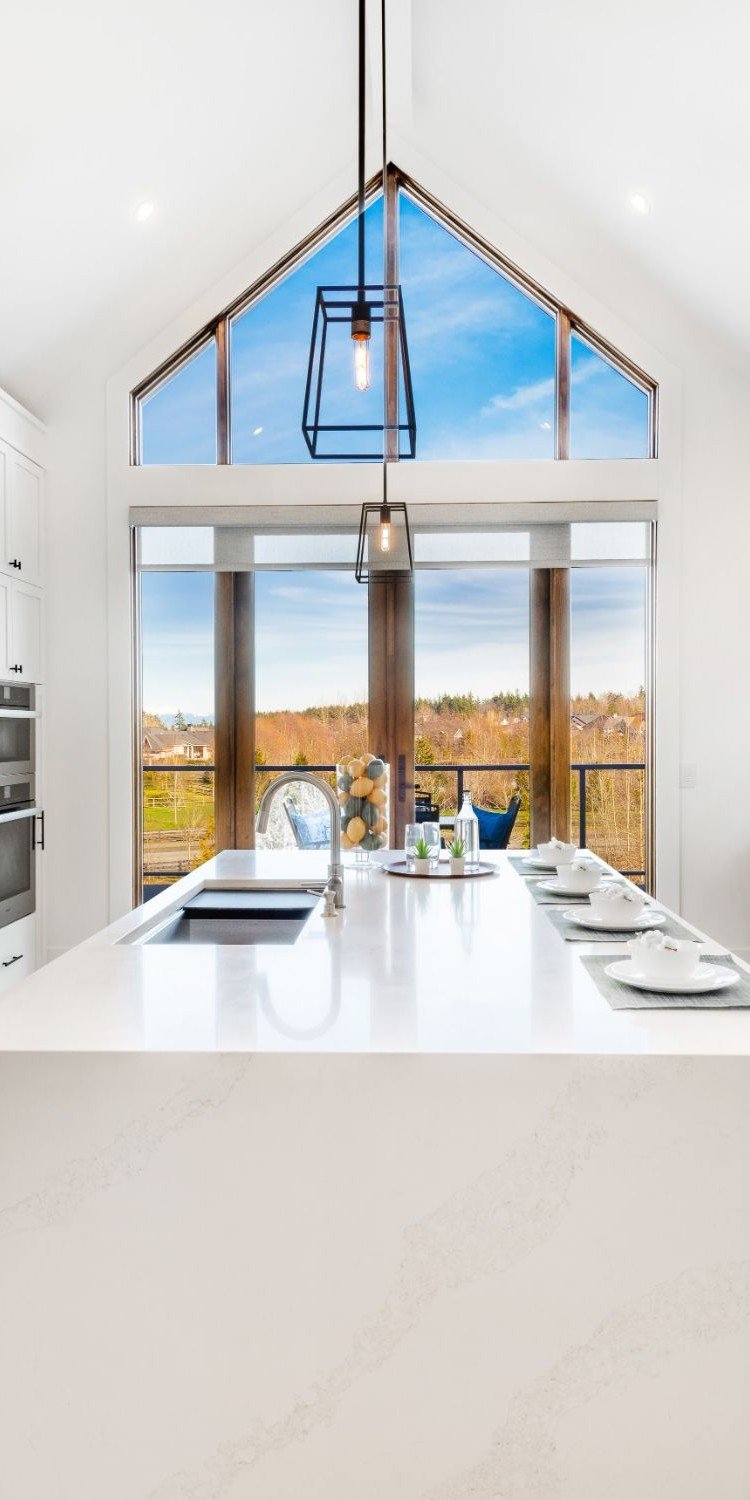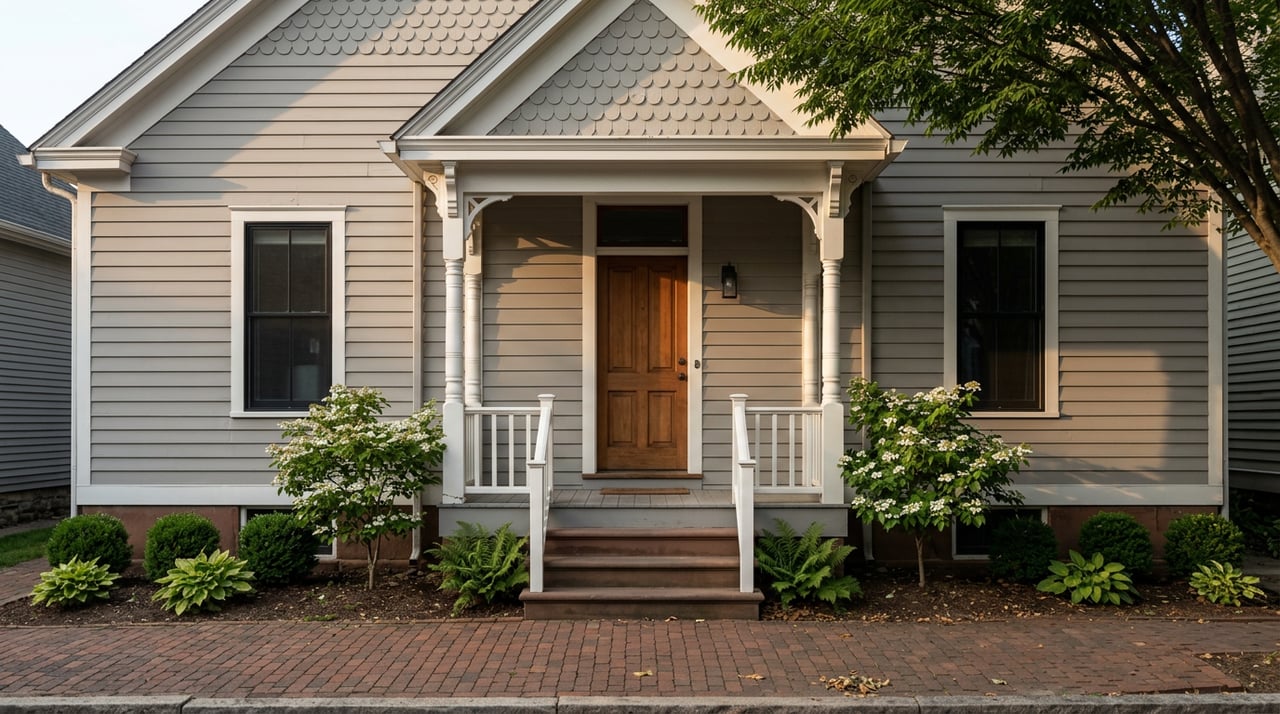
Two houses went under contract in New Haven this summer, both within walking distance of a Yale shuttle stop, both in century-old housing stock, both marketed as "walkable, historic, close to everything." One sold for roughly what a lot of buyers expect a starter home to cost. The other sold for nearly double.
If you've been comparing East Rock and Westville on paper, you've probably already noticed the gap. What the listing sheets won't tell you is who else is bidding against you, and why that matters more than square footage or a walk score.
The Number That Doesn't Match the Story
East Rock's closed sales have run at a median of $845,500 in recent 2026 transaction data, up roughly 49 percent year over year. That's a striking jump for a neighborhood that isn't getting bigger or adding new housing stock at any real pace. Most of what's for sale in East Rock was built around 1900, in the Victorian and Colonial style that defines streets like Orange and Livingston.
Westville, a few miles west along Whalley Avenue, tells a different story. Homes there listed for a median of $449,000 in May 2026, at roughly $225 per square foot, and were typically under contract in about three weeks. In July 2025, the pricier pocket known as the Suburban Westville Historic District had already posted a median sale price of $690,662, up about 25.6 percent from the prior year, so Westville isn't cheap everywhere either. But even its priciest corner sits well below where East Rock has landed.
Both neighborhoods sit inside the same city, subject to the same property tax structure: New Haven's mill rate for the 2025 Grand List is 39.962 mills, applied to 70 percent of a property's assessed value. That means the tax bill difference between East Rock and Westville isn't a rate difference. It's a price difference, full stop. A buyer paying East Rock's typical price is looking at meaningfully more property tax dollars purely because the purchase price is higher, not because the city charges East Rock owners more.
So if it isn't the tax rate, and the housing stock in both places is old and charming in similar ways, what's actually setting the price?
Who's Really Writing the Winning Offer in East Rock
Look past the single-family comps and East Rock's market starts to look less like a neighborhood of homebuyers and more like a neighborhood of landlords bidding against homebuyers.
In April 2026, a 37-unit apartment building at 516 Orange Street sold for $11.5 million, more than double what it had sold for in 2015 and well above the city's own appraisal of around $7.3 million for tax purposes. The buyer was a New York-based holding company. The seller was a real estate investment firm. No renovations were planned. It was a straightforward bet that Orange Street land keeps appreciating.
In 2025, three neighboring multifamily properties at 451, 455, and 459 Orange Street sold together for $2.17 million after being listed at $3.15 million. The selling agent's pitch to the trade press focused on what made the parcel attractive to an investor, not a homeowner:
"It's unique to find three contiguous properties in a downtown area, and these all have excellent off-street parking, which is rare in that neighborhood."
Neither of these deals shows up as a "median sale price" in the way a single-family home does, but they shape the market anyway. When multifamily buildings on Orange Street trade for figures like these, the land underneath every property on that street gets repriced along with them, including the single-family Victorians a first-time buyer might be touring on a Saturday morning. East Rock's housing stock was built dense, with plenty of three-family and multi-unit structures mixed in among single-family homes, so an owner-occupant house hunter in East Rock is routinely competing against buyers who are pricing the property as an income asset first and a home second.
Westville's Quieter Version of the Same Math
Westville doesn't have East Rock's multimillion-dollar apartment sales, but it has its own version of investor pressure, and it's showing up in listing language rather than headline transactions.
A number of Westville's current single-family listings are marketed explicitly around zoning potential. Properties built before 1963 in certain residential zones can be converted to add units under the city's current multi-family rules, and sellers know it. A modest ranch on a "street of many multi-family homes" gets pitched to investors as a conversion candidate, not just a starter home, and that pulls its asking price closer to what a duplex would command rather than what a single-family buyer budgeted for.
Meanwhile, the neighborhood is genuinely adding small businesses, which usually tracks with rising foot traffic and rising nearby property interest. Inkberry Art Shop and Malby Artisan Bread and Pastries opened at 910 and 912 Whalley Avenue in 2025 with support from the Westville Village Renaissance Alliance, adding to a commercial strip that already includes Bella's Café, Pistachio Café, and Keys on Kites Tattoo & Gallery. New storefronts on Whalley Avenue are a genuine quality-of-life upgrade for residents, and they reinforce the same pressure the zoning dynamic above is putting on nearby asking prices.
Here's the part that surprises people who assume Westville is priced on its "walkable village" reputation: by Walk Score's standard national index, Westville rates only 49 out of 100, in the "minimally walkable" range. The neighborhood's commercial strip is genuinely walkable. Much of its residential footprint, on the higher ground away from Whalley Avenue, is not. That distinction matters if walkability is part of your reason for choosing the neighborhood. Ask specifically about a property's distance to Whalley Avenue rather than assuming the whole neighborhood carries the same day-to-day convenience.
| East Rock | Westville | |
|---|---|---|
| Recent median sale price | $845,500 (2026 closed sales) | $449,000 (May 2026 listings) |
| Year-over-year change | +49% | Suburban Westville Historic District: +25.6% (as of July 2025) |
| Typical time to contract | 40 days | 21 days |
| Housing stock era | Mostly built c. 1900 | Mostly built c. 1900-1920s |
| Walk Score | Not separately rated | 49 (minimally walkable) |
| City mill rate applied | 39.962 mills | 39.962 mills |
The Project That Could Reset the Comparison
There's one more piece worth tracking before you commit to either neighborhood: a 3.62-acre site at 781 Whalley Avenue and 50 Fitch Street, straddling the Westville and West Rock line, has full site plan approval for a 245-unit mixed-use development called Westville Gateway, with retail space built in. The property was listed for sale at $10.5 million in early 2025, with construction not yet underway at that time.
A project of that size, if it moves forward, would add a meaningful jump in housing supply to a neighborhood that hasn't seen new construction at this scale, right at its gateway from downtown. That could ease some of the price pressure driving Westville's recent gains, or it could simply attract more buyers to the area once it's built and occupied. Either way, if you're comparing East Rock and Westville with a multi-year horizon in mind, this is the kind of pending project worth asking your agent about before you assume today's price gap is permanent.
What This Means If You're Bidding This Fall
If East Rock's median sale price and Westville's median list price were run through New Haven's mill rate at face value, the tax gap alone would be substantial. A home near East Rock's median, assessed close to its sale price, would carry an estimated property tax bill in the neighborhood of $23,000 a year. A home near Westville's median would land closer to $12,500. Those are rough estimates, since assessed values lag market prices and depend on the city's revaluation cycle, but the ratio tracks the price gap almost exactly. This is the clearest evidence that the tax structure isn't creating the divide between these two neighborhoods. The purchase price is.
Understanding who else is in the room when you make an offer changes how you should think about that price. In East Rock, expect to be measured against buyers who will happily absorb a higher price per door because the building cash flows as a rental. In Westville, expect some of your competition to be pricing in future conversion rights you may have no interest in using. Neither dynamic is wrong, but both explain why a straightforward owner-occupant comparison between these two neighborhoods rarely produces a clean answer.
A Few Questions Worth Asking Before You Choose
Is East Rock's 49 percent jump sustainable, or is it a blip from a small number of high-value sales? Multifamily transactions like the $11.5 million Orange Street sale can swing a neighborhood's numbers hard in a short window. Ask for the underlying sales count, not just the percentage, before treating any single-year change as a permanent trend.
Does Westville's zoning history affect a buyer who only wants a single-family home? Not directly, but it affects what you're bidding against. A seller who knows their property qualifies for conversion has less incentive to accept an owner-occupant's offer over an investor's.
Should I wait to see what happens with the Westville Gateway site? That depends on your timeline. Large approved projects can sit for years before breaking ground, and this one hadn't started construction as of its early 2025 listing. It's worth a conversation about how much weight to put on a project still working through its next steps.
If you're weighing East Rock against Westville, or trying to figure out where else in New Haven your budget actually lands, Schuyler Goines can walk through the current inventory, the zoning specifics, and what a realistic offer looks like in either neighborhood right now. Let's Connect.