Connecticut's underground oil tank law is short and permissive. It does not require removal of an old tank. It does not ban a new one from going into the ground in most towns. It asks only that a seller write down what they know and hand a buyer that paper before anyone signs a binder. Read the statute on its own and a buried tank looks like a disclosure line item, nothing more.
Then a lender's underwriting file lands on someone's desk, and the tank stops being paperwork and starts being the reason a closing date moves. That gap between what the state requires and what a mortgage actually demands is the real friction point in a lot of North Haven transactions right now, and it shows up here more than in most towns in this market.
The Law Asks You to Disclose, Not to Dig
Connecticut requires anyone selling a one to four family home to give buyers a written Residential Property Condition Report before a binder, contract, option, or lease with an option to buy gets signed. The report asks a direct question: is there an underground fuel tank, and if so, where is it and how old is it. Skip the report entirely and state law has a built-in penalty for that, a flat $300 credit to the buyer at closing.
What the statute doesn't say matters just as much. There's no requirement that a nonleaking residential tank come out of the ground. The State Fire Marshal's office governs installation and removal, the local fire marshal has to be notified before a tank comes out, and the Department of Energy and Environmental Protection only enters the picture if a leak turns up. Some towns around the state have passed their own ordinances restricting new tank installations, usually places near lakes or other water sources, but nothing in state law forces an existing tank out of a seller's yard.
One more point worth separating out: the Property Transfer Act, the other Connecticut environmental law that comes up in searches about oil tanks, requires disclosure of environmental conditions when certain properties change hands. For the ordinary sale of a single family home, though, the document doing the day-to-day work is the Residential Property Condition Report, the same one asking about tank age and location. That's the form your attorney and your buyer's attorney will actually spend time reviewing.
Why North Haven Sees This More Than Most Towns
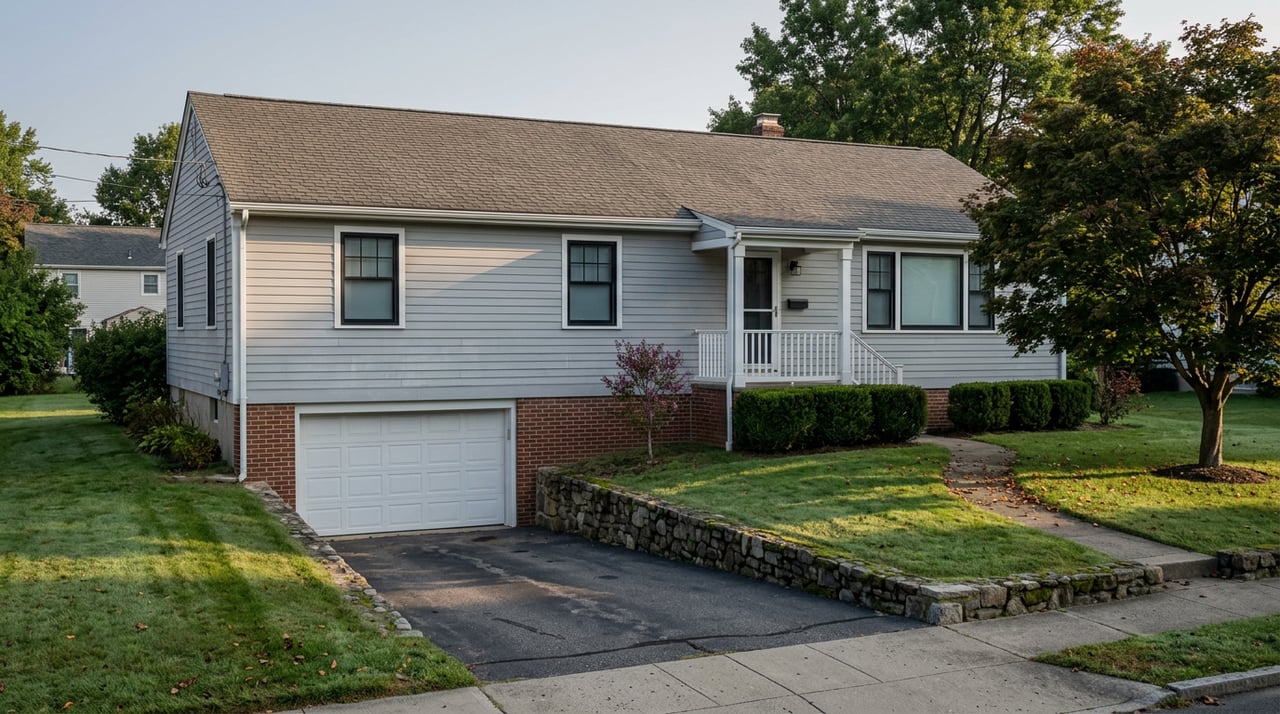
North Haven's housing stock explains why the question keeps coming up. Town-level housing age data updated at the start of this year shows just over half of North Haven's homes were built between the 1940s and 1960s, the postwar boom that filled the town with capes, ranches, and split-levels for returning GI Bill families. Roughly another quarter of the housing stock dates to 1970 through 1999. Homes from that first wave were built when oil heat with a buried tank was the standard setup, years before natural gas lines reached every street in town.
Walk through current listings in sections like Montowese or the Grove and that era is still visible on the ground: raised ranches and capes on generous lots, some still running on private well and septic rather than town water and sewer. Statewide, an estimated 40 percent of Connecticut households rely on a septic system instead of public sewer, and North Haven's postwar sections fit that pattern. A house built to 1950s spec on a well and septic lot was very likely built with an underground oil tank too, and a lot of those tanks are still down there, decades past installation, with no state requirement that anyone dig them up.
Where the Law's Silence Meets a Lender's Spreadsheet
Here's the part the statute never warns anyone about. Mortgage underwriting and title insurance have moved well past what state law requires. Connecticut towns that field homeowner questions on this topic are candid about it: there's no law prohibiting the sale of a house with a working underground tank, but it's getting harder every year to finance one, driven by the marketplace and the mortgage industry rather than by statute. Title companies increasingly want documented proof of removal, or at minimum a clean tank sweep, before they'll issue a policy without an exception written around the tank. A buyer's lender may decline the loan outright, or approve it only with a contingency that appears nowhere in Connecticut law.
| What Connecticut Law Requires | What Closing Often Requires | |
|---|---|---|
| Disclosure | Written report noting tank presence, location, age | Same, plus removal or sweep documentation |
| Removal | Not mandated if the tank isn't leaking | Frequently expected before a lender will fund |
| Oversight | Local fire marshal at removal, DEEP only if a leak is found | Title company and underwriter review before closing |
The tank doesn't have to come out to satisfy the State of Connecticut. It often has to come out, or at least be proven clean, to satisfy the underwriter sitting between your buyer and their loan.
What Actually Happens When a Tank Turns Up
If a North Haven home has a known or suspected tank, DEEP's own guidance lays out the sequence. Hire a registered contractor. DEEP recommends a soil sample collected from underneath the tank and its piping, sent to a Connecticut certified lab and analyzed for Extractable Total Petroleum Hydrocarbons, the standard test for petroleum contamination. Photograph the tank and the excavation. Have the contractor put together a short letter report documenting the removal along with the lab results, and keep that paperwork somewhere safe, because the next buyer's attorney or lender will ask for it.
Most Connecticut towns also require a building permit before a tank comes out or gets replaced, so a call to North Haven's building department before scheduling a contractor saves a step later. If the soil comes back clean, that letter report becomes one of the most valuable pieces of paper in the file. If it doesn't, the seller is responsible for the cleanup, and any release has to be reported to DEEP's spill response division. DEEP's own guidance puts it plainly: it's better for residential tanks to sit above ground, precisely because a leak underground can go undetected for years before anyone notices.
The Timing Trap Nobody Budgets For
Removal and remediation costs run from roughly $2,000 to $15,000 or more as of early 2026 estimates, depending on whether the soil comes back clean or shows contamination. The bigger surprise for most North Haven sellers isn't the price. It's the calendar.
Spring is when North Haven listings traditionally hit the market, and spring is also when tank removal contractors carry their heaviest scheduling loads, the same weeks every homeowner with a spring closing date is trying to book the same crews. Fall brings a second wave, driven by homeowners winterizing before the ground freezes. A seller who discovers a tank question after already going under contract ends up competing for a contractor's calendar at the exact moment demand peaks, which is how a clean 30-day close turns into 60.
If You're Selling or Buying in North Haven Right Now
- Pull any prior tank removal paperwork before you list. If a previous owner had a tank removed, that letter report and lab result belongs in your disclosure file, not a drawer.
- If you genuinely don't know whether your home ever had a buried tank, "unknown" is an honest answer on the disclosure form. Guessing wrong is what creates a dispute later.
- Talk to a lender early if you're buying a home built before 1990. Ask directly whether their underwriting guidelines require tank documentation, before you're three weeks into a purchase contract.
- If a sweep or removal looks likely, schedule it before you list rather than after an accepted offer. You'll have more contractor availability and more time to get lab results back clean.
A Few Questions Worth Asking Before You Sign Anything
Does every home built before 1990 in North Haven have an underground tank? No. Plenty of homes converted to gas or switched to an above ground tank years ago. The disclosure form exists precisely because the seller, not a database, is the only reliable source for that history.
If my tank was removed years ago but I can't find the paperwork, what do I do? Check with the contractor who did the work if you remember the name, or look through your own closing file from when you bought the home. If nothing turns up, disclose what you know honestly and expect a buyer's attorney or lender to ask follow up questions.
Does a clean tank sweep guarantee financing will go through? No single document guarantees anything with underwriting, which varies by lender and loan type. A documented clean sweep is the strongest evidence you can offer, but the final call sits with whoever is funding the loan.
If you're weighing what a North Haven listing needs before it goes live, or you're comparing a postwar ranch against a newer build and want a straight answer about what a tank question could mean for your timeline, Schuyler Goines can walk through the disclosure form with you line by line and help you get ahead of it before it becomes a scheduling problem. Let's Connect.